How Long Is the Boat from St Martin to St Barth? About 40 Minutes, or 45 to 80 by Ferry
Short answer: St Barth sits about 14 nautical miles (16 statute miles or 26 km) from St Martin, across the Anguilla Channel. A private speedboat covers that distance in about 40 minutes on the water from Cole Bay or Simpson Bay to Gustavia. The ferry is closer than most guides claim: Great Bay Express is scheduled at 45 minutes from Philipsburg, Voyager at about 80 from Marigot. The gap that matters is on land, not at sea. The rest of this page covers what changes those numbers in either direction.
Crossing time by boat type
| Boat type | Crossing time | Cruising speed |
|---|---|---|
| Cigarette / fast speedboat | 30–35 min | ~28–32 knots |
| VanDutch motor yacht | 35–40 min | ~25–30 knots |
| Concept 44 / open sport | 40–45 min | ~22–26 knots |
| Sailing catamaran (under power) | 2–3 hours | ~7–9 knots |
| Great Bay Express ferry (Philipsburg) | 45 min | scheduled |
| Voyager ferry (Marigot) | ~80 min | scheduled |
Most operators settle around 25 knots, which puts the typical crossing right at 40 to 45 minutes. Faster is possible, a Cigarette 36 can do 28 to 32 knots flat-out, but pushing speeds beyond 25 knots in any chop becomes uncomfortable for the passengers, which usually defeats the point.
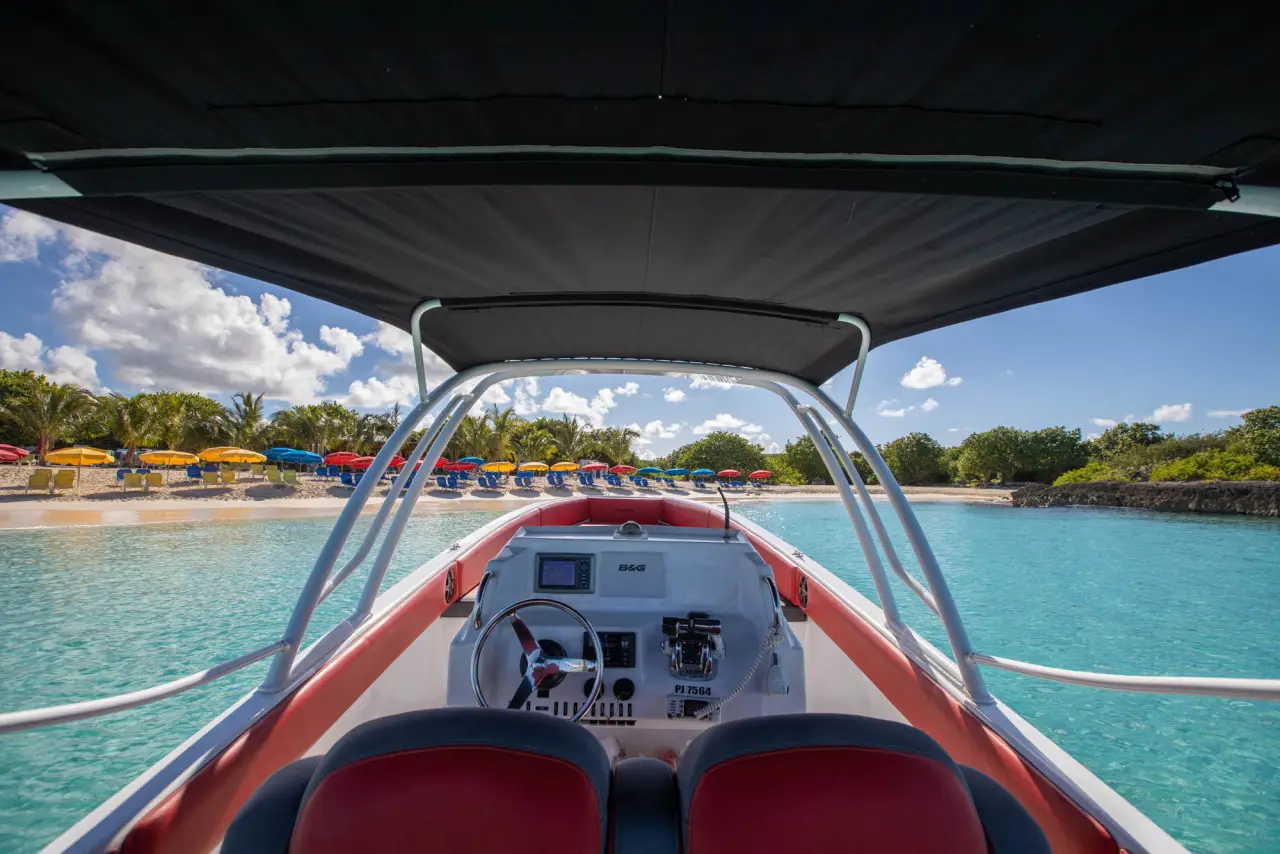
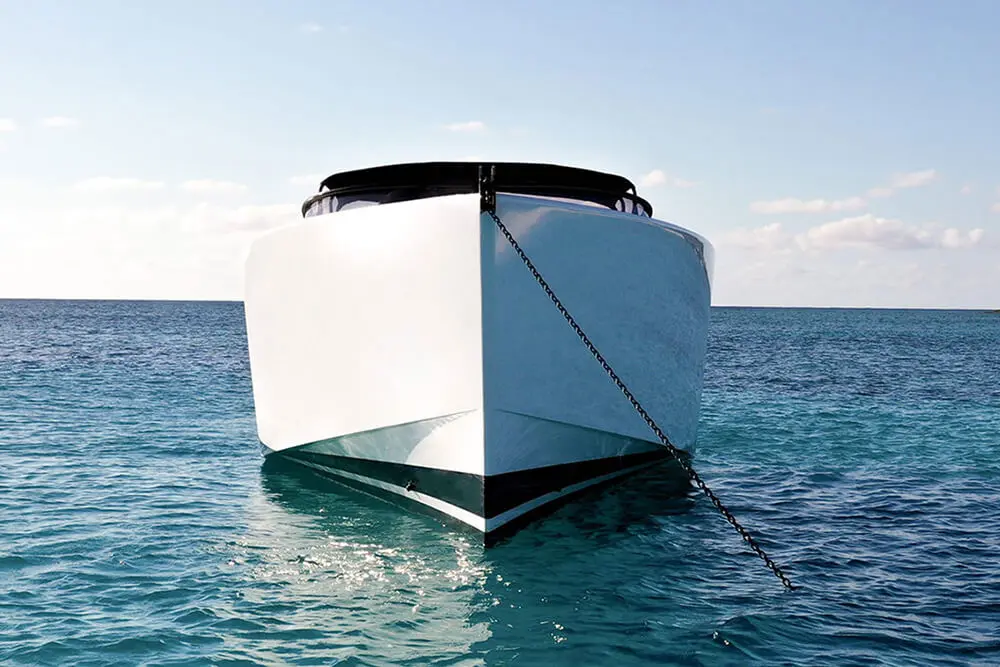
Crossing time depends on the boat and the sea state.
What pushes the crossing past 40 minutes
Wind direction
Caribbean trade winds blow east-to-west for most of the year. Going from St Martin to St Barth means heading roughly west-to-east, into the wind. On a 15 to 20 knot trade-wind day, standard from December to April, the boat loses 1 to 3 knots and the crossing adds 5 to 10 minutes. The return leg is downwind and gets that time back.
Atlantic swell
From January through March, storms in the North Atlantic generate long-period swell that reaches the Caribbean. When the wave height hits 6 to 8 feet, the captain slows down to keep the ride comfortable, and a 40-minute crossing becomes 50 to 55. If the swell tops 10 feet, the captain cancels.
Where you pick up
Cole Bay and Simpson Bay on the Dutch side are the usual pickups, and they give you the shortest practical run. Philipsburg and Oyster Pond are marginally closer in a straight line, but Philipsburg is a ferry terminal rather than a charter base, and the reef pass at Oyster Pond is rough enough that it's rarely a sensible pickup. Marigot on the French north coast adds roughly 20 minutes, because the boat has to round the western tip of St Martin before heading east.
Time of day
Morning crossings between 6 and 10 AM are usually the calmest and the fastest. The trades build through the morning and peak in the early afternoon. Late-afternoon crossings on windy days can be 5 to 10 minutes longer than the same crossing at 8 AM. Sunset crossings around 5:30 to 7 PM often calm again as the wind drops.
The boat itself
Lighter speedboats cut through chop faster than the heavier motor yachts. The yachts are more comfortable in rough water but cruise a few knots slower. The Concept 44 sits in the middle, fast and stable, the most-used vessel for the route in average conditions.
Ferry vs private boat: 45 or 80 minutes against 40, and where the real gap is
The two ferry operators are not equally slow, and the difference is bigger than most guides admit. Great Bay Express runs Philipsburg to Gustavia in 45 minutes, fixed at exactly that on its own published 2026 schedule. That is barely slower than a private boat on the water. Voyager takes about 80 minutes from Marigot. Voyager advertises around 55, but that number is measured buoy to buoy: add the channel, the docking and getting a hundred people off with their luggage, and 80 is what the crossing actually costs you. The French-side route is longer too, since the boat has to round the west of the island.
Where the ferry actually loses your afternoon is on land, not at sea. Loading and unloading a hundred passengers with luggage at a public terminal adds 15 to 20 minutes at each end, check-in closes before departure, and you are tied to two or three fixed sailings a day. That is the real gap: not 45 minutes against 40, but a fixed schedule and a queue against leaving when you land.
Distance: how far is St Martin from St Barth, exactly?
The straight-line (great-circle) distance between Gustavia harbor on Saint-Barthélemy and Cole Bay on Sint Maarten is approximately:
- 14 nautical miles (the unit captains use)
- 16 statute miles (the unit Americans are used to)
- 26 kilometers (the unit Europeans are used to)
The crossing route isn't quite straight, boats round the eastern point of St Barth on arrival, and exit Simpson Bay lagoon on departure, so the actual sailed distance is closer to 16–18 nautical miles. The two islands are visible from each other on a clear day — you'll spot St Barth long before you arrive.
Door-to-door time including ground transport
The 40-minute boat figure is just the on-water portion. Real total time from one island's interior to the other:
- SXM airport to St Barth villa: 75–90 minutes (10 min drive + 5 min boarding + 40 min crossing + 5 min disembark + 15 min drive to villa)
- Sint Maarten hotel to St Barth villa: 60–80 minutes
- Marigot hotel to Gustavia hotel: 70–80 minutes (longer drive to dock + crossing)
- Public ferry (any door-to-door): 3–4 hours including taxis on both ends
Frequently asked questions
How long is the boat ride from St Martin to St Barth?
About 40 minutes on the water on a private boat cruising around 25 knots, from Cole Bay or Simpson Bay to Gustavia. Trade winds and Atlantic swell can stretch that to 50 or 55 minutes between January and March. The ferry runs 45 minutes from Philipsburg with Great Bay Express, and about 80 from Marigot with Voyager.
How far is St Barth from St Martin?
St Barth sits about 14 nautical miles (16 statute miles or 26 km) from St Martin, across the Anguilla Channel, from the south coast of Sint Maarten to the west coast of Saint-Barthélemy. The actual sailed route is closer to 16–18 nautical miles because boats round the eastern point of St Barth and exit Simpson Bay lagoon. On a clear day you can see one island from the other well before arrival.
Why does the boat ride take 40 minutes if it's only 14 nautical miles?
Speedboats cross at around 20-25 knots in normal conditions, which works out to about 40 minutes for the 14-mile straight-line distance, plus a few minutes for harbor maneuvering at each end.
What makes the boat take longer than 40 minutes?
Strong head winds, large Atlantic swell, choppy seas in winter, or pickup from Marigot (French side, longer route) can add 10-20 minutes. Most crossings are within 5 minutes of the 40-minute average.
Can the boat go faster than 40 minutes?
Faster speedboats can do the crossing in 30-35 minutes in calm conditions. Most operators target 40 minutes as a balance between speed, fuel and passenger comfort. Pushing speeds above 25 knots in chop becomes uncomfortable for guests.
How long is the boat from Anguilla to St Barth?
Roughly an hour to an hour and a half from Blowing Point, depending on the boat and the sea state: the direct line is blocked by Sint Maarten, so the boat has to round the island. There's no public ferry on this route, a private boat is the only direct option. See our Anguilla guide.
What's the fastest crossing record?
In genuinely calm conditions, light wind, and on a fast Cigarette-style hull, captains have done it in about 28 minutes. That's the absolute floor. Plan for 40 and anything faster is a bonus.
Does the crossing time change at night?
Same crossing time, but captains usually cruise slightly slower at night for visibility. Most crossings are scheduled for daylight hours when possible.
How long is St Barth to St Martin (the return)?
Same 40 minutes, often a few minutes faster on the way back since you're typically going downwind. See the full guide for both directions.